
AI Security Audit for LLM and RAG Deployments in Dallas-Fort Worth
AI systems introduce attack surfaces that traditional security tooling was never built to find. We test your LLM deployment before an attacker does.
What we do
We audit AI systems for the failure modes that scanners and firewalls miss. That means your LLM deployments, your RAG pipelines, and your AI agents. We look for prompt injection, guardrail bypass, model supply-chain risk, and training data exposure. Then we hand you hardening guidance your team can act on, not a stack of theory.
Most security tooling was built for code and networks. It has no concept of a model that follows instructions hidden inside retrieved content, or an agent that can be talked into an action it was never meant to take. We test the parts of your AI stack that behave differently from everything you already secure.
What's included
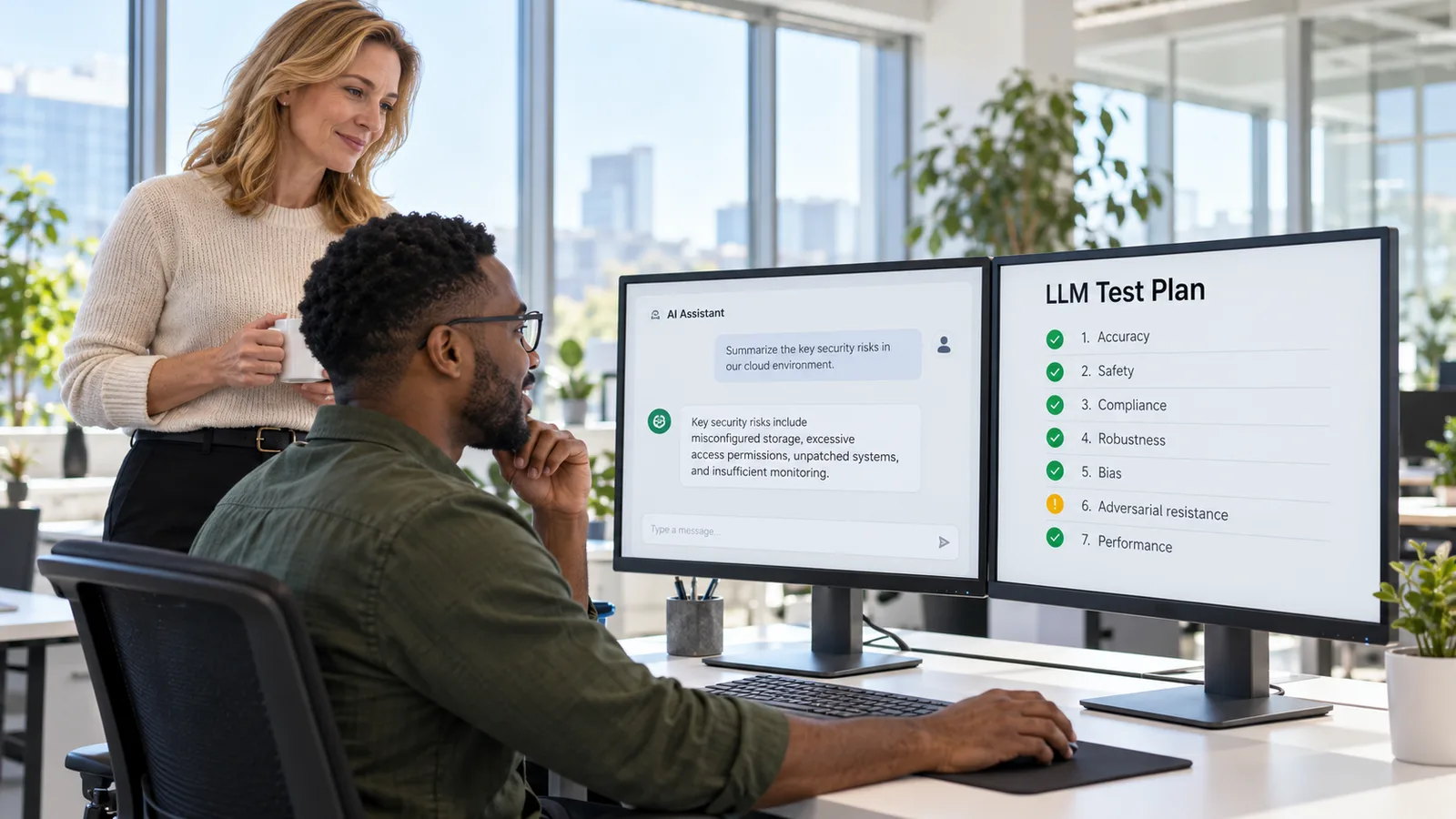
Guardrail effectiveness testing
You put guardrails in front of your model. We find out whether they hold. We probe the input and output controls that are supposed to block unsafe requests, leaked system prompts, and off-policy responses. We test the boundaries with adversarial phrasing, encoding tricks, and multi-step setups that a single-shot filter tends to miss. The result tells you which guardrails work, which fail quietly, and which give a false sense of coverage.

Prompt injection and jailbreak assessment
Prompt injection is the attack traditional tooling has no model for. We test direct injection from user input and indirect injection from retrieved documents, web content, and tool output. We attempt jailbreaks that override your system instructions, extract hidden context, or push the model past its policy. For agents, we check whether injected text can trigger real actions like sending data or calling tools. You get a clear map of what an attacker can make your AI do.

Model supply-chain risk review
Your AI stack depends on models, weights, adapters, and libraries you did not write. We review where those components come from and how much you trust them. We look at how models are sourced, pinned, and updated, and where an unverified artifact could enter your pipeline. We flag the points where a compromised or swapped component would go unnoticed. Supply-chain risk in AI looks different from classic dependency risk, and it deserves its own review.
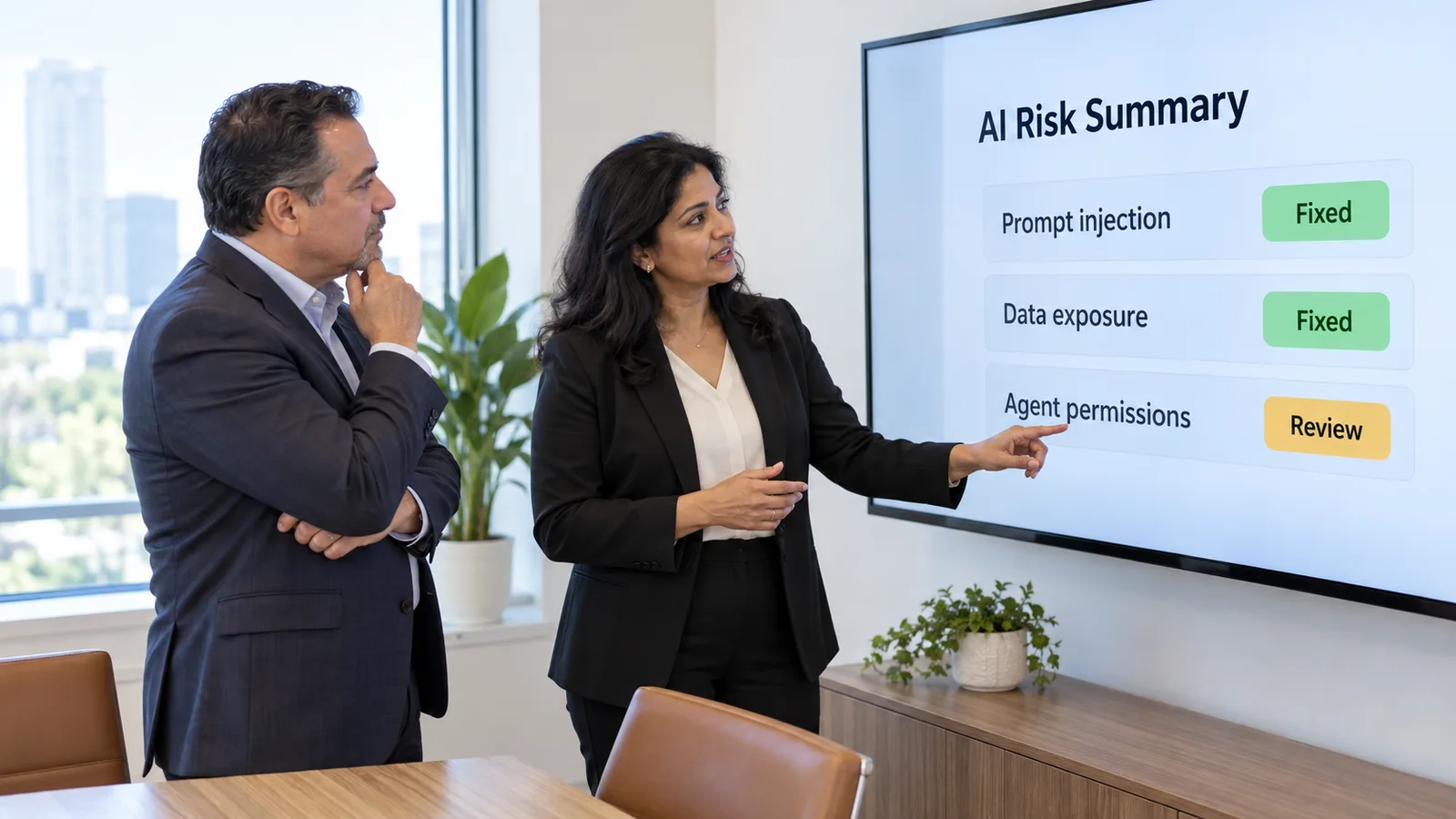
Training data and context-window exposure analysis
Models leak what they were given. We analyze what sensitive data reaches the model through training, fine-tuning, retrieval, or the context window. We test whether that data can be pulled back out through targeted prompts. We check whether one user can reach another user's context, or whether internal data ends up in a customer-facing response. The goal is a plain accounting of what your model can expose and to whom.

Output-filtering and policy hardening review
Blocking a bad request is only half the job. We review the controls on what your model is allowed to say and do after it generates a response. We test output filters against data leakage, unsafe content, and policy violations that slip past input checks. We review how your policies are defined, enforced, and logged, and where the gaps sit. Then we give you specific configuration changes, not a vague call to tighten things up.
Who it's for
You are a good fit if:
- You are deploying an LLM, RAG system, or AI agent into a customer-facing product.
- You are running AI on high-risk internal data and want an independent check before go-live.
- You added guardrails and want proof they actually stop the attacks you care about.
- You had an AI-related incident and need to understand how it happened.
- Your existing security team knows networks and code but has not tested a model.
- You need a security review a customer, partner, or auditor will take seriously.
We are based in Frisco, TX and work on-site across Dallas-Fort Worth. Clients elsewhere we handle remotely. Engagements run project-based, fractional, or ongoing, and there is no long-term contract required. You bring us in for the review you need and nothing more.
What you can expect
A scored risk matrix. You get a rating across each AI attack surface we test, from guardrails to supply chain. It shows you where the real exposure is and what to fix first. No wall of undifferentiated findings.
A plain-English report. The findings are written for people who have to make decisions, not just for engineers. Each issue states what it is, how we reproduced it, and what it means for your business. Your team can hand it up the chain without translating it.
A hardening playbook. You get concrete steps covering guardrail configuration, access controls, and monitoring. It is written so your team can act on it directly. We tell you what to change, in what order, and why.
An independent read. We are not selling you the AI stack we are reviewing, so we have no reason to soften the findings. You get a straight assessment of what is exposed and what to do about it. That is the point of bringing in an outside review.
Frequently asked questions
What kinds of AI systems do you audit?
We audit LLM deployments, RAG pipelines, and AI agents. That covers customer-facing chat and internal tools built on top of a model. If your system takes untrusted input or reaches sensitive data through a model, it is in scope.
How is this different from a normal penetration test?
Traditional testing looks at code, networks, and infrastructure, and those tools have no concept of prompt injection or guardrail bypass. We test the model-specific attack surface: injection, jailbreaks, data leakage through the context window, and supply-chain risk. It complements a standard pen test rather than replacing it.
Do we need to give you access to our production system?
Not necessarily. We can test against a staging environment that mirrors production, which is often the safer choice before go-live. We scope access with you up front and work within whatever boundaries your environment requires.
What do we actually receive at the end?
You get a scored risk matrix across each AI attack surface, a plain-English findings report, and a hardening playbook. The playbook covers guardrail configuration, access controls, and monitoring recommendations. Everything is written so your team can act on it directly.
Do we have to sign a long-term contract?
No. Engagements are project-based, fractional, or ongoing, and there is no long-term contract required. Many clients bring us in for a single review before go-live or after an incident. We are based in Frisco, TX, work on-site across Dallas-Fort Worth, and handle clients elsewhere remotely.
Not sure where to start?
Book a free security consultation. We assess your current posture and recommend the right move for your situation. No commitment, no pressure.
Schedule a Consultation