
Security Awareness Training for Dallas-Fort Worth Teams
Most breaches start with a click. We turn your people into a working defense with training that is short, relevant, and reinforced by simulated attacks.
What we do
Most breaches start with a click. Someone opens the wrong email, types a password into the wrong page, or approves a login request they did not make. Firewalls and endpoint tools do not stop that. Your people do, if they know what to look for.
We train the people who handle your email, your credentials, and your data. The training is short, it maps to the threats your staff actually face, and it is reinforced with simulated attacks so the lesson lands and stays. We track how your team performs over time and adjust what we teach based on what the numbers show.
What's included

Phishing awareness training
Phishing is still the most common way attackers get in, so we start there. We teach your staff how to read a suspicious message, spot a spoofed sender, and slow down before they click a link or open a file. The lessons are short and built around real message patterns, not generic slides your team will forget by lunch. We show the exact tells: mismatched domains, urgency pressure, requests to move money or reset a password. When someone reports a bad message instead of clicking it, the training worked.

Security policy education
A policy no one reads changes nothing. We turn your acceptable-use, password, and data-handling rules into training your staff can follow without a legal degree. People learn what they can and cannot do with company data, how to handle credentials, and who to call when something looks wrong. We keep it plain and tied to daily work, so the rules stick to real tasks instead of sitting in a binder. When the rules are clear, fewer people break them by accident.
Simulated attack exercises
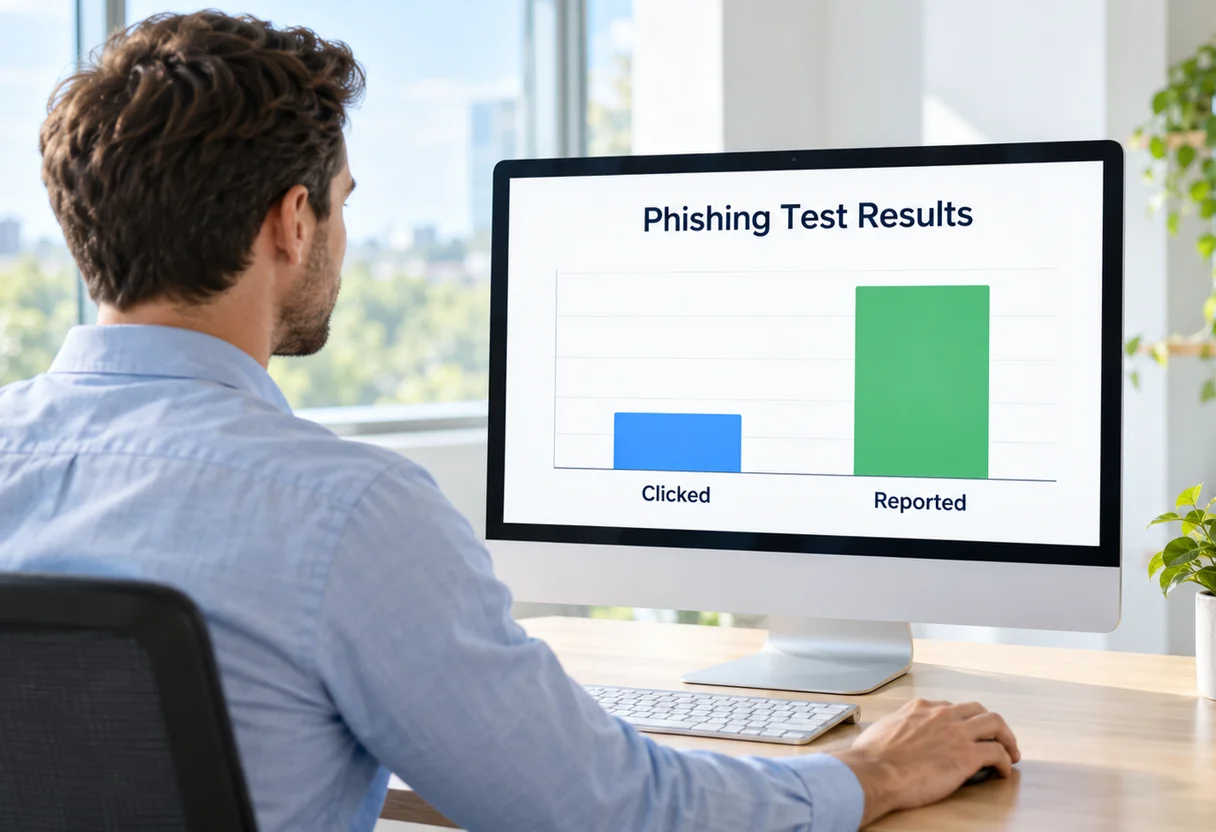
Reading about phishing is not the same as facing one. We send controlled, safe simulated attacks to your staff and watch who clicks, who reports, and who ignores it. No one gets shamed. The point is to find the gaps and close them with targeted follow-up for the people who need it. We run these on a schedule so resilience is measured over time, not guessed at once and forgotten.

Executive and high-risk-role briefings
Attackers do not target everyone equally. They go after the people who can move money, approve access, or reach sensitive systems, which usually means your executives, finance staff, and admins. We give these people focused briefings on the tactics aimed at them, from wire-fraud lures to fake login prompts. The sessions are short and direct because their time is short. The people most often targeted get the training that matches their risk.

Quarterly refresh programs
Awareness fades. A single training day in January does little by June, and attacker tactics change through the year. We run refresh cycles each quarter to keep the lessons current and the resilience numbers moving in the right direction. Each cycle updates the content, re-tests with new simulations, and reports how your team is trending. Training becomes a habit instead of a one-time event.
Who it's for
You are a good fit if:
- Your employees handle email, credentials, or sensitive data, which covers nearly every business.
- You have had a phishing scare, a near-miss, or a real incident and want it not to happen again.
- An insurer, client, or auditor is asking for proof that your staff gets security training.
- You want role-appropriate training, not one generic video pushed to the whole company.
- You want measurable phishing-resilience numbers, not a checkbox and a hope.
- You want the people most often targeted to get briefings that match their actual risk.
We work with Dallas-Fort Worth organizations on-site and support clients elsewhere remotely. Engagements are project-based, fractional, or ongoing, and we do not require a long-term contract. You start where your risk is and scale from there.
What you can expect
A baseline first. We run an initial simulated phishing test to see where your team stands today. That gives you a real starting number instead of a guess. Every later result is measured against it.
Training that fits the role. Finance, executives, and general staff face different threats, so they get different training. Sessions are short and built around the risks each group actually meets. Nobody sits through material that does not apply to them.
Numbers you can show. We report click rates, report rates, and how they change over time. You get proof of progress you can hand to an insurer, a client, or your board. When a number stalls, we tell you why and adjust.
Reinforcement, not a one-off. Awareness fades without repetition, so we come back on a schedule with fresh simulations and updated content. The goal is a team that stays sharp, not one that peaked the week of the class.
Frequently asked questions
How long does the training take for our staff?
Sessions are short by design, usually minutes rather than hours, because long training does not stick. We favor brief, focused lessons reinforced with simulations over time. That keeps your team's day intact while the resilience numbers still improve.
Do you require a long-term contract?
No. Engagements are project-based, fractional, or ongoing, and you can start with a single baseline test and one round of training. Many clients then move to quarterly refresh cycles, but that is your call. You scale up or stop based on results.
Can you train our team remotely, or do you come on-site?
Both. We work with Dallas-Fort Worth organizations on-site and support clients elsewhere remotely. Simulations and reporting run the same way regardless of location.
How do you measure whether the training is working?
We run a baseline phishing simulation before training, then re-test on a schedule. You get click rates and report rates tracked over time, so progress is a number you can see. When a metric stalls, we tell you why and adjust the program.
Why do executives need separate briefings?
Attackers target the people who can move money or approve access, which usually means executives, finance, and admins. General training does not cover the specific lures aimed at them, like wire fraud and fake login prompts. Focused briefings match the training to their actual risk.
Not sure where to start?
Book a free security consultation. We assess your current posture and recommend the right move for your situation. No commitment, no pressure.
Schedule a Consultation