
Vulnerability Assessment Dallas
You cannot fix weaknesses you have not found. Our vulnerability assessments give Dallas businesses a ranked, honest picture of what they are exposing.
What we do
We look at a Dallas business the way somebody probing it from the outside would, then tell you in order which of the openings we found deserve your attention this week. The work covers the network, the web applications and the APIs behind them, the cloud accounts, and the wireless, and it ends in a ranked list rather than a pile of raw output.
A clinic in Oak Lawn and a distributor off I-35 rarely have the same weaknesses, but they usually arrive with the same complaint: a tool handed them a list hundreds of lines long and none of it said which item an attacker would reach for first. We read the results by hand, drop what is wrong, and order what is left by what it would actually cost you. This page describes how the Dallas engagement runs. The wider detail on scope and method sits on our vulnerability assessment page.
What's included

Scoping and discovery
Nothing runs until we have written down which systems are fair game, which are off the table, and which hours we stay away from. A retailer normally wants us clear of Saturday afternoon. A law office normally cares more about the document system being left alone near a filing deadline. We also build the list of what your Dallas offices are putting on the public internet, which is usually where a forgotten test server turns up.
Network and host review
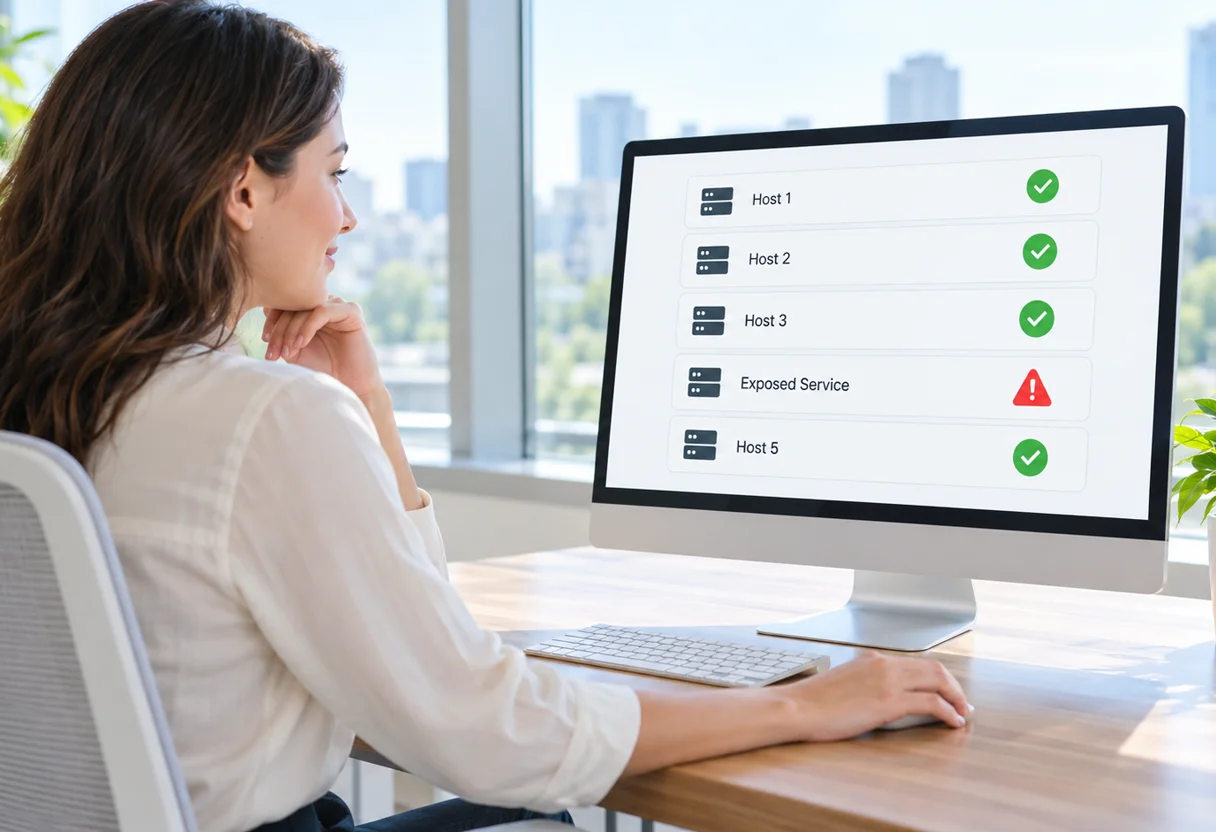
Internal and external hosts get checked for software nobody patched, configuration nobody revisited, services that should never have been reachable, and passwords still set to whatever the box shipped with. Where you hand us credentials we log in and look from the inside, because the view from a stolen staff account is far uglier than the view from the parking lot. Each result names the host, the service, and the reason it matters.
Application and API testing
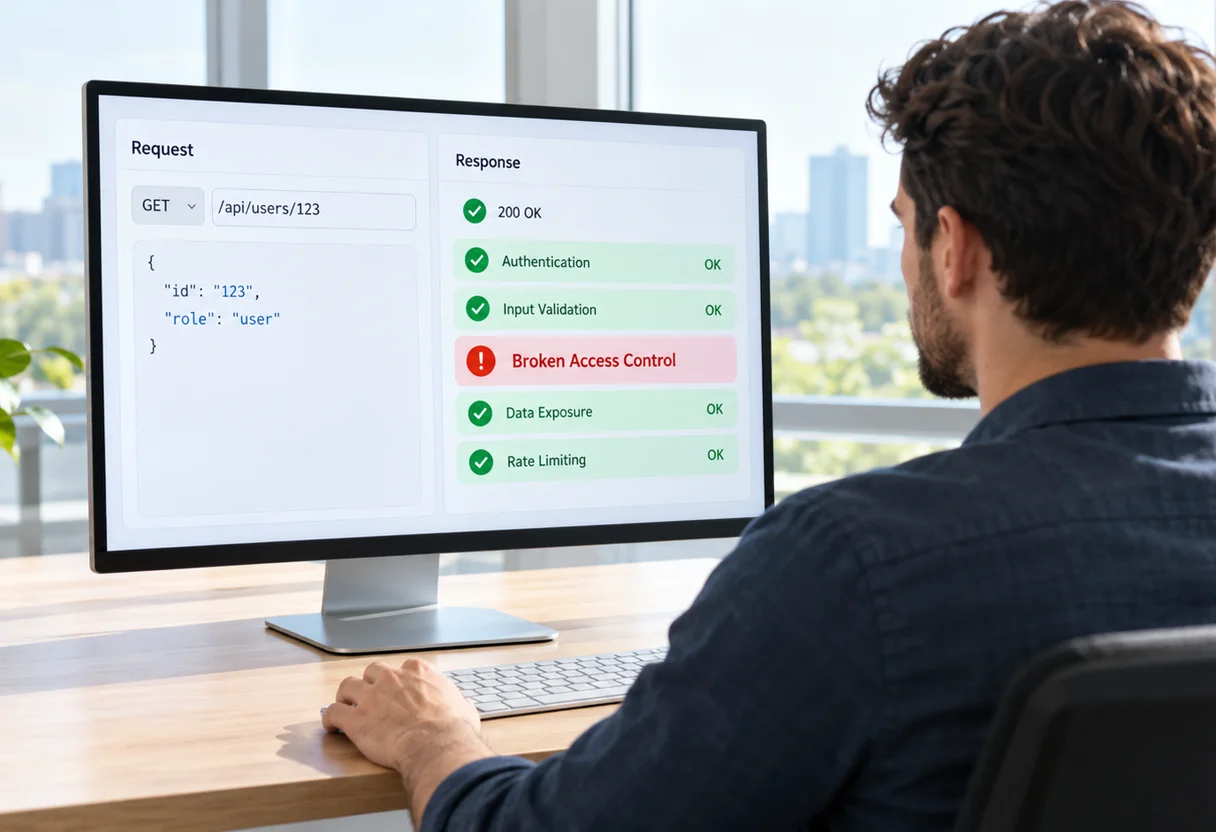
Your customer portal, your booking form, and the interfaces sitting behind them get exercised directly, including endpoints no browser ever calls. We are hunting injection, broken access control, weak authentication, and the logic gaps no tool recognizes, such as one record number being swapped for another and the application handing over somebody else's data. Developers receive the exact request that produced each result, so nobody has to guess at reproducing it.

Cloud and wireless exposure
In the cloud we look at who can do what, which storage is open to the world, which management consoles answer from the internet, and whether anything is being logged at all. On wireless we check encryption, stray access points, and whether the guest network in your lobby quietly reaches the servers in the back room. Being based here means the on-site half happens on a day you pick instead of whenever travel allows.

The report and what comes after
The deliverable is short at the front and detailed at the back: the handful of items to fix now, then everything else with a severity, an explanation in ordinary language, and instructions specific enough to hand to whoever runs your IT. Where closing one thing breaks another, we say so upfront instead of letting you discover it. Once the serious findings are closed out, a penetration test is the natural next move.
Who it's for
You are a good fit if:
- Your Dallas clinic or dental practice holds patient records and has never had an outsider check how well they are protected.
- A corporate client is asking your law office to document where its security stands before a matter moves forward.
- You run a distributor or a shop floor where the network grew one piece at a time and nobody holds a full inventory of it.
- Your retail locations take card payments and you want to know what someone on the guest Wi-Fi can reach.
- Your church or private school runs donor and student data on a thin budget and needs to know what to fix first.
- Cyber insurance renewal paperwork is asking questions nobody in the building can answer.
We come out to sites across Dallas, and the rest is handled remotely, including for clients outside Texas. Work is booked by the project, on a fractional basis, or ongoing, and none of it locks you into a long contract.
What you can expect
Rules set in writing first. Scope, limits and timing are agreed before the first scan runs, so nothing lands on you as a surprise.
A short list, not a scanner dump. Results arrive ordered by what an attacker could realistically do with them, in language a non-specialist can follow.
Fix instructions somebody can work from. Every item carries the steps to close it, written for the person who will be doing the closing.
An outside read with nothing attached. We are an independent security firm, so what you hear is not shaped by a product we want to sell you. Reach us at (888) 382-7685 or security@adaptiveips.com.
Frequently asked questions
How long does a Dallas assessment take, start to report?
Most small and midsize environments take one to two weeks of testing, with the report a few days behind that, depending on how many hosts and applications are in scope. You get a date range when we agree the scope. If something serious turns up early, you hear about it then rather than waiting for the document.
Do you need to be inside our building?
Only for the parts that require it. Wireless and anything physical happens on site, and we drive to Dallas locations rather than flying somebody in. Network, cloud and application work is done remotely. Clients outside the area are handled remotely from start to finish.
We already pay for a scanning tool. What are we buying from you?
Judgment. A tool produces a list. It cannot tell you that two middling findings on the same server add up to a clean path into your finance system. An analyst reads the output, throws out what is wrong, and puts what is left in the order that matters for your business.
Should a vulnerability assessment come first?
Yes, in almost every case. The assessment gives you the whole map of what is exposed. A pen test picks one route through it and proves how far that route goes. Paying for the deep test first usually means paying to discover something a broad review would have shown you in week one.
What happens if you find something serious mid-engagement?
You hear about it that day, by phone. Anything that looks like an active compromise stops the testing and turns into an urgent conversation about containment instead of a line item in a report three weeks later. Call (888) 382-7685 or security@adaptiveips.com to scope an assessment.
Not sure where to start?
Book a free security consultation. We assess your current posture and recommend the right move for your situation. No commitment, no pressure.
Schedule a Consultation